
Exploring the Biggest Crypto Hacks in History and How to Protect Your Assets
Discover the biggest crypto hacks in history and learn essential tips to protect your digital assets against vulnerabilities in the crypto world.
In this article
Cryptocurrency's history is marked by significant hacks that have led to massive financial losses. Understanding these incidents is crucial for anyone interested in crypto security and self-custody. Let's delve into some of the biggest crypto hacks in history and discuss how you can protect your digital assets.
Understanding the Biggest Crypto Hacks in History
The crypto world has seen several high-profile hacks, underscoring the importance of security. Below, we explore some notorious incidents that shook the industry:
- Mt. Gox (2014): One of the earliest and most infamous hacks, where 850,000 Bitcoins were stolen.
- Bitfinex (2016): Hackers made off with approximately $70 million worth of Bitcoin.
- Coincheck (2018): A loss of over $530 million in NEM tokens.
- KuCoin (2020): Hackers stole $25 million from the exchange.
- Ronin Network (2021): A massive breach resulting in a $615 million loss.
These incidents highlight the vulnerabilities in crypto exchanges and the importance of robust security measures.
How Crypto Exchanges Get Hacked
Crypto exchanges are often targets for hackers due to the vast amounts of assets they hold. Here are some common ways exchanges get hacked:
- Phishing Attacks: Tricking users into revealing their login credentials.
- Software Vulnerabilities: Exploiting bugs or weaknesses in the exchange's code.
- Insider Threats: Employees with malicious intent or those who are careless with security protocols.
Understanding these methods can help users take preventative measures to protect their assets.
Self-Custody: Your Keys, Your Coins
Self-custody involves storing your cryptocurrency in a wallet you control, rather than on an exchange. The phrase "not your keys, not your coins" emphasizes this concept, indicating that if you don't hold the private keys, you don't truly own your crypto assets. Self-custody provides greater security but requires responsibility and knowledge.
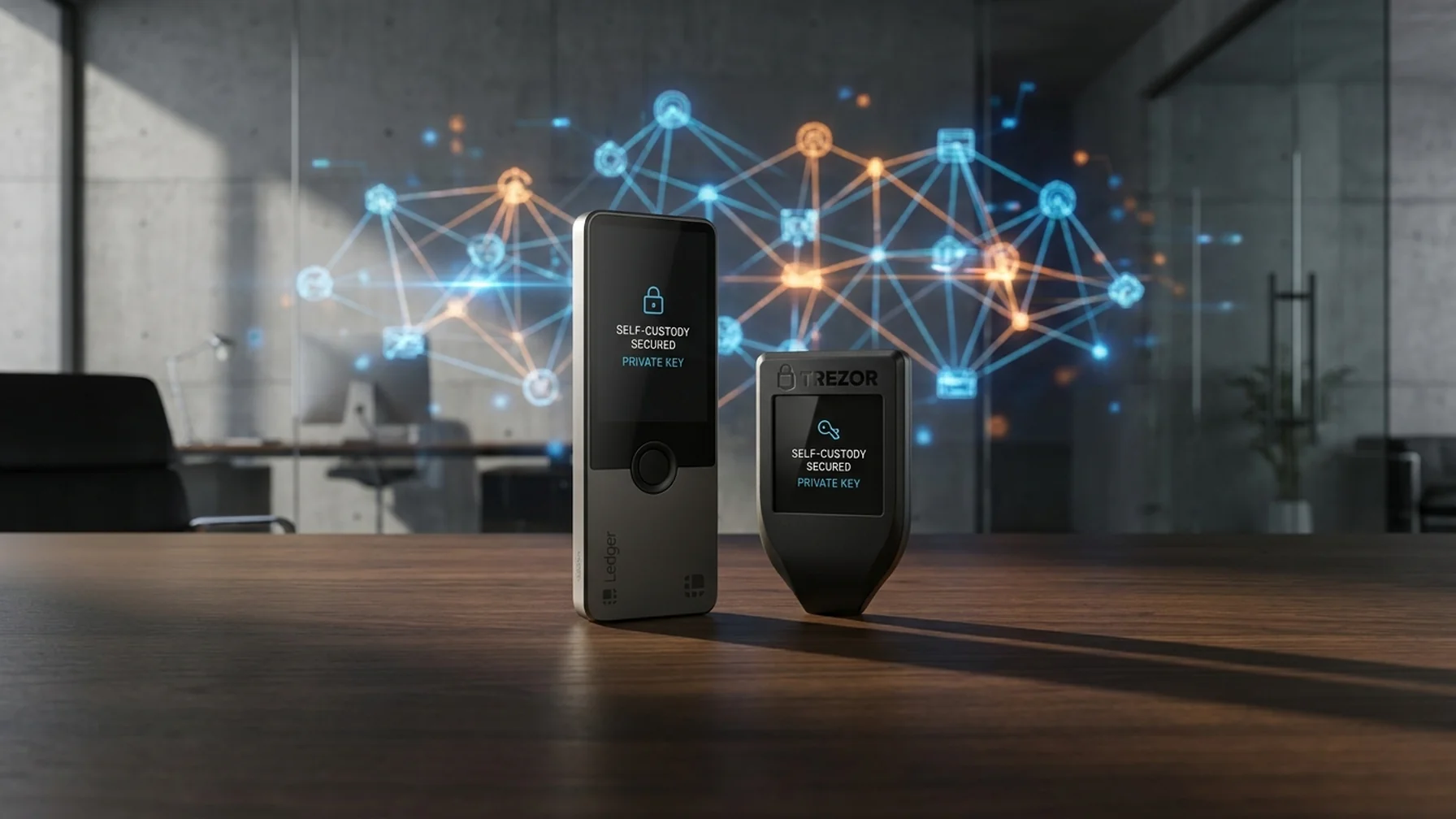
Comparison: Ledger vs. Trezor for Self-Custody
When choosing between Ledger and Trezor, consider factors such as design, interface, and supported cryptocurrencies. Both provide robust security, but your choice may depend on personal preferences and needs.
Below is a comparison table of key features:
| Feature | Ledger | Trezor |
|---|---|---|
| Design | Sleek and compact | Simple and sturdy |
| Interface | User-friendly with app integration | Intuitive with web-based access |
| Supported Cryptocurrencies | Over 1,500 | Over 1,000 |
Both devices offer excellent security for your digital assets. The decision may come down to which interface you prefer and the specific cryptocurrencies you plan to store.
Self-Custody vs. Exchanges: Making the Right Choice
Deciding between keeping your assets on an exchange or opting for self-custody involves weighing the pros and cons of each option.
- Exchanges: Offer convenience and ease of access but are often targets for hackers.
- Self-Custody: Provides more control and security but requires careful management of private keys and recovery phrases.
Consider your security needs and technical comfort when choosing the best option for you.
How to Take Your Crypto Off an Exchange
Moving your cryptocurrency from an exchange to a personal wallet is a straightforward process:
- Choose a secure wallet (software or hardware).
- Transfer funds from the exchange to your wallet address.
- Secure your wallet with proper backup methods.
Following these steps reduces the risk of losing your assets to exchange hacks.
Exploring Hardware Wallets: Security for Your Crypto
Hardware wallets are physical devices that store your private keys offline, offering robust protection against online threats. They are considered one of the safest methods for self-custody.
Best Hardware Wallets for Beginners
For those new to hardware wallets, popular options include:
- Ledger Nano S
- Trezor One
- KeepKey
These wallets offer user-friendly interfaces and strong security features.
How to Set Up a Hardware Wallet
Setting up a hardware wallet typically involves these steps:
- Connect the wallet to your computer.
- Install the wallet software.
- Create a new wallet and secure your recovery phrase.
- Transfer your cryptocurrency to the wallet.
Following these steps ensures your crypto assets are securely stored.
Protecting Your Crypto: Lessons from History
The history of crypto hacks serves as a powerful reminder of the need for robust security measures. By learning from past incidents and implementing strong security protocols, you can safeguard your digital assets and navigate the crypto space with confidence.